Heat pumps in food processing: where the economics work today
The question every roadmap now asks
Somewhere in every food and beverage decarbonisation plan there is a line that says heat pumps. The corporate target needs them, the advisers recommend them, and the plant engineer is left to answer the only question that matters: where, on this site, does a heat pump actually pay? The honest answer is more encouraging than the sceptics think and more conditional than the vendor decks admit. The economics are not a matter of opinion. They are set by three things: the temperature you need, when you need it, and what you pay for electricity against gas.
Why food processing suits heat pumps better than most industries
Around two thirds of the end-use energy consumed at food and beverage manufacturing plants typically goes to manufacturing processes such as process heating, per US Department of Energy analysis. That thermal demand is the prize. And unlike steel or cement, most of it is modest temperature: pasteurisation, CIP, washdown and drying preheat commonly sit below 100 to 150 degrees C. That is exactly the band where high temperature heat pumps now operate credibly.
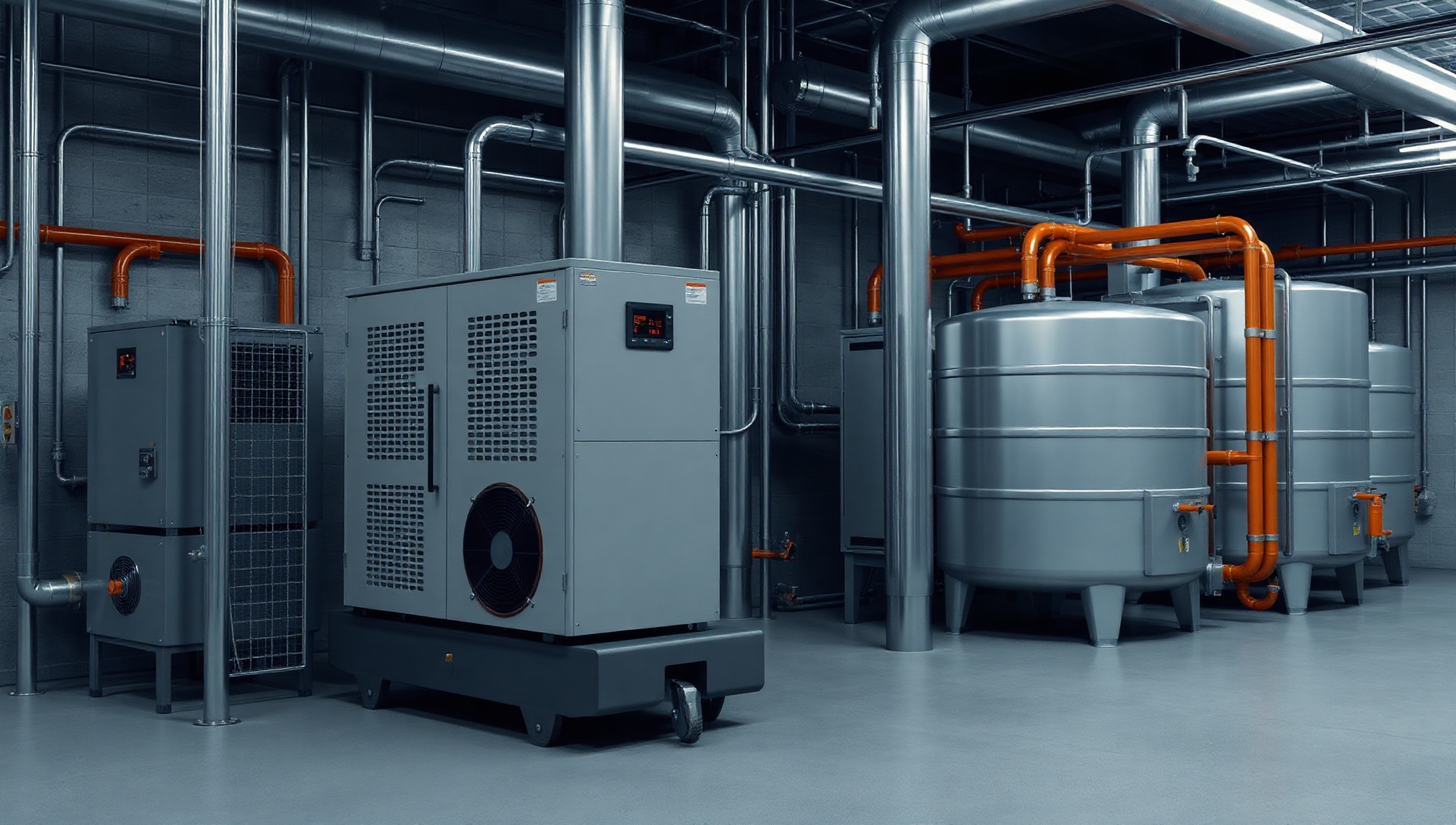
Food plants hold a second advantage that gets less attention: simultaneous heating and cooling. A chilled or frozen operation runs refrigeration plant around the clock, and every kilowatt hour of cooling rejects heat at the condensers. A heat pump that takes its source from refrigeration heat rejection, rather than from ambient air, starts halfway up the temperature hill. The lift is smaller, the coefficient of performance is higher, and the business case improves accordingly.
Where the economics work today
CIP and washdown hot water
Cleaning in place and washdown demand hot water daily, at temperatures a heat pump reaches comfortably. The load is steady, predictable and large. Where refrigeration waste heat is available as a source, this is usually the first conversion we model, and frequently the best one.
Pasteuriser support heat
A well-designed pasteuriser regeneration section already recovers most of the product heat. The remaining top-up duty is low temperature and continuous, which suits heat pump operation far better than a peaky batch load does.
Process loop and feedwater preheat
Even where steam stays, preheating boiler feedwater or process hot water loops with pumped heat shrinks the steam demand the boiler has to meet. Partial electrification is still decarbonisation, and it avoids betting the whole boiler house on a single technology decision.
The conditions that consistently favour a heat pump case:
- long operating hours, so capital is spread across more delivered heat
- hot water demand rather than live steam
- refrigeration plant running year round, providing a warm and stable heat source
- heat demand mapped by temperature band, so the machine is sized for the load it can serve rather than the site peak
Where the economics struggle
Honesty matters here, because a failed first project poisons the appetite for a second. Heat pumps struggle where the duty is live steam at pressure, where drying or evaporation demands high temperatures at scale, and where the site’s electrical connection has no headroom left. They also struggle commercially when the gap between electricity and gas prices is wide. A heat pump multiplies every unit of electricity into several units of heat, but if the per-unit price ratio exceeds that multiple, the energy bill goes up rather than down. Model tariff scenarios, not a single price point.
One special case deserves its own line: evaporation. On dairy evaporators, mechanical vapour recompression is an established, proven electrification route that often outperforms a general-purpose heat pump on the same duty. If your site evaporates, assess MVR first.
The MCPD has made this decision urgent
Boiler decisions are no longer optional or leisurely. Under the EU Medium Combustion Plant Directive, tighter emission limits apply to existing 5 to 50 MW plant since January 2025 and reach 1 to 5 MW plant in 2030. Compliance can mean retrofitting abatement, switching fuel or replacing plant outright. Sites that respond with a like-for-like boiler swap are locking in another two decades of fossil thermal demand at precisely the moment the low temperature slice of their load could be carved out and electrified. The better sequence is to size the replacement boiler for the heat a heat pump cannot serve, not for the site as it ran a decade ago.
Building a business case that survives scrutiny
The heat pump cases that get approved share a common anatomy:
- a heat demand map by temperature band, built from metered data rather than nameplate ratings
- hourly load profiles, matched against refrigeration heat rejection to prove the source is there when the demand is
- integration engineering done to food-safe standards: hygiene zones, materials and washdown exposure considered from the first drawing
- tariff sensitivity analysis rather than a single energy price assumption
- a measurement and verification plan to IPMVP, agreed before commissioning, so the saving is a measured fact rather than a model output
This is feasibility and delivery work of the kind our design and projects team does week in, week out, and the load mapping that underpins it typically starts inside a plant-wide energy audit.
The pragmatic sequence
Recover heat passively first: regeneration sections, desuperheating, economisers. Then pump the heat you cannot recover passively. Then electrify what remains. A heat pump bought to serve heat you should have recovered for free is an expensive way to feel sustainable. Done in the right order, electrified low temperature heat is one of the most bankable decarbonisation moves available to food and beverage plants today, and the sites that map their heat demand now will make the MCPD timetable work for them rather than against them.
More from the blog
 Heat Recovery & Electrification
Cold WFI: what membrane generation changes for site energy
Water for injection is one of the most energy-intensive utilities on a pharmaceutical site. Membrane-based cold generation changes…
11 Jun 2026 Heat Recovery & Electrification
Pinch analysis: the fastest route to process heat savings
Most chemical plants are paying to heat streams with steam while paying again to cool others with water.…
11 Jun 2026 Heat Recovery & Electrification
Why dryer exhaust is the biggest prize in the mill
Drying accounts for around 70% of energy use in the pulp and paper sector, and a large share…
11 Jun 2026
Every energy consultant wants to sell you something. We just tell you what to fix.
One curated view of what's actually happening in industrial energy
Think of this as your shortcut, case studies, technical insights, and upcoming webinars from EM3, delivered when there is something genuinely worth reading.