Cold WFI: what membrane generation changes for site energy
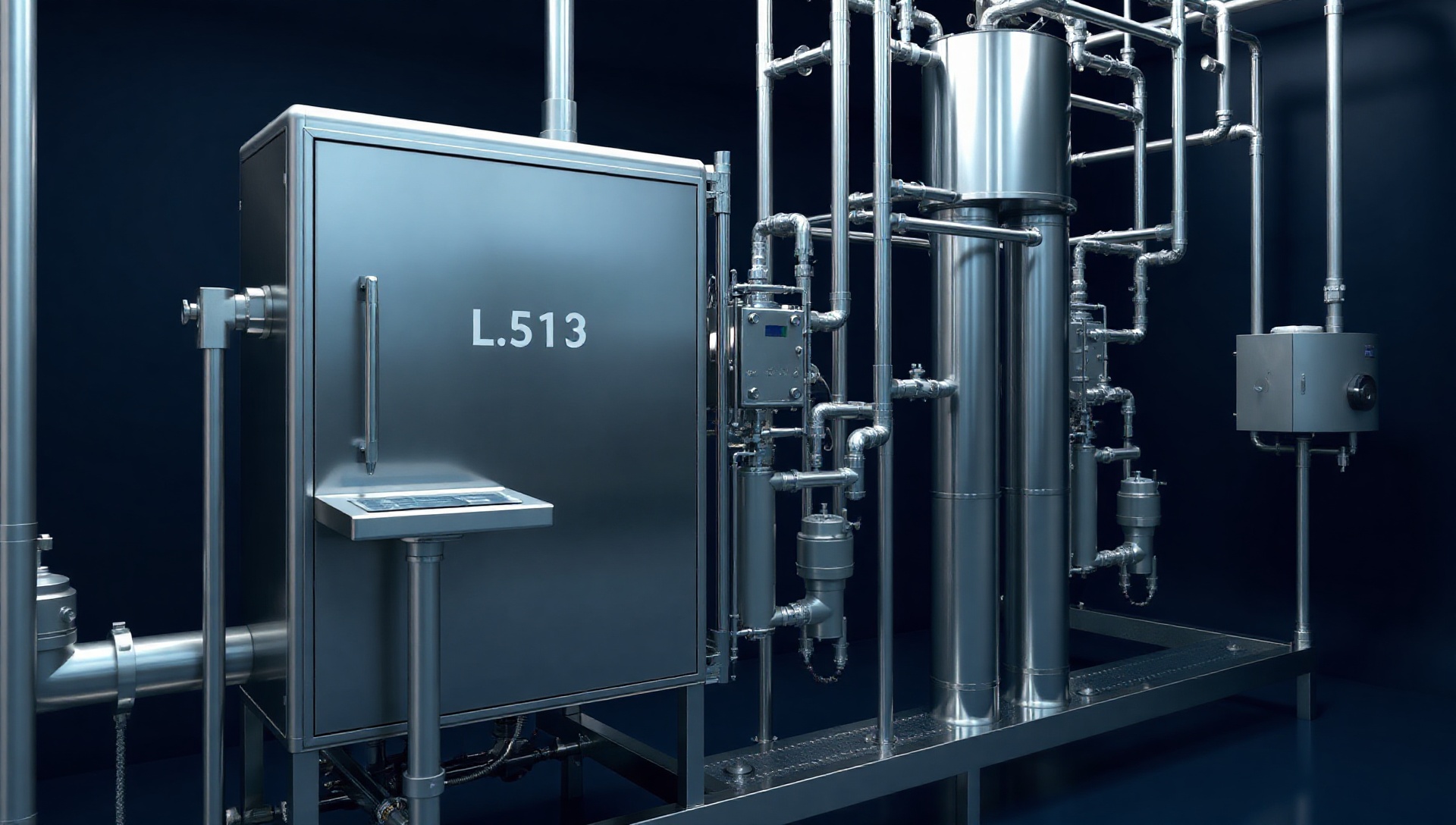
Water for injection, WFI, is quietly one of the most expensive utilities on a pharmaceutical site. Producing it has traditionally meant distillation, either multi-effect or vapour-compression, which consumes large quantities of clean steam. Distributing it has traditionally meant holding the loop above 80 degrees C and circulating it 24/7 for sanitisation. Put those two together and you have a continuous, high-temperature heating and pumping load that runs whether you are making product or not. For most sites it is a fixed cost that no one questions, because for a long time there was no compliant alternative.
What changed
The European Pharmacopoeia now permits WFI to be produced by purification methods judged equivalent to distillation, which opened the door to membrane-based generation using reverse osmosis, electrodeionisation and ultrafiltration. That regulatory shift is what makes cold WFI a live engineering option rather than a theoretical one. Membrane-based cold WFI can use up to around 50% less energy than distillation, because it removes the clean steam demand at the heart of the distillation process.
It is worth being precise about why. A distillation plant boils water to separate it from contaminants, which is energy-intensive by definition. A membrane train pushes water through successive barriers at ambient or low temperature, using electrical energy for pumping rather than thermal energy for evaporation. The saving is real, but it is a change in the type of energy as well as the amount, and that has consequences for the rest of the site that need to be engineered, not assumed.
The loop is where the second saving lives
Switching the generator is only half the story, and arguably the smaller half. The standing load on most WFI systems is the distribution loop itself, held hot and pumped continuously. Hot WFI and purified water loops kept above 80 degrees C for sanitisation represent a permanent heating and pumping demand that exists independently of how the water is made.
Cold WFI generation pairs naturally with cold or ambient loop distribution, where sanitisation is achieved by other validated means rather than continuous high temperature. Converting a suitable loop to cold distribution removes the standing high-temperature heating demand entirely. This is frequently the larger prize, because it eliminates a load that runs every hour of every day, not just during production. The qualifier matters: not every loop is a candidate, and the decision rests on the contamination-control strategy, the materials, and the validation history. But where a loop can be converted, the saving compounds with the generation change.
If you are keeping distillation, engineer the turndown
Not every site will move to membranes, and there are sound reasons to keep a distillation plant: existing validation, capital constraints, or a contamination-control strategy built around hot water. That does not mean accepting the full energy cost. Distillation plants are typically controllable between 50 and 100% of output, so the generator can be made to track demand rather than running flat out around the clock.
Most plants do not, because the controls were set up for reliability rather than efficiency and never revisited. Matching generation to actual demand, rather than producing to a fixed maximum and dumping the excess capacity as standing losses, recovers a meaningful share of the energy without any change to the water itself. It is the lowest-risk measure on the list because nothing about the product contact surfaces or the loop changes.
Capture the heat you are already making
Whichever route a site takes, there is recoverable heat in the WFI system that usually goes to drain or to atmosphere. Heat recovery on the distillate and on the pure-steam condensate is a standard win on distillation plants, feeding preheat into boiler feedwater or into clean-in-place and sterilise-in-place hot water. On a membrane system the recoverable heat is smaller, because the process runs cold, but the wider utility picture still offers opportunities: compressor heat recovery and CIP and SIP returns can offset hot water demand that the WFI change does not touch.
The principle is the same across the plant. Before adding new generation capacity or new heating, account for the heat already being produced and rejected. It is almost always cheaper to recover a kilowatt than to generate one, and the metering you install to prove the recovery doubles as the baseline for everything that follows.
How to decide
A cold WFI conversion is a design and projects decision with a validation dimension, not a like-for-like equipment swap. The feasibility work needs to model the membrane train against the existing distillation energy, quantify the loop conversion saving separately, assess the validation and contamination-control impact, and verify the projected savings against a measured baseline using IPMVP. Skipping the loop analysis is the most common way these projects underdeliver, because the generation saving gets all the attention while the larger standing load on the loop goes unexamined. The same caution applies to the validation timeline: a conversion that looks cheap on paper can stall for a year if the contamination-control impact is discovered late rather than scoped at the feasibility stage.
Get the analysis right and the case is often stronger than expected, because two savings stack: less energy to make the water, and far less energy to keep it moving. We scope this work as an engineering feasibility study with validation built in from the start. See the wider context on our pharma and nutraceuticals page, and read how we deliver the conversion itself under design and projects. If your WFI system is running hot around the clock, there is almost certainly energy on the table, and membrane generation is only the first place to look for it.
More from the blog
 Heat Recovery & Electrification
Heat pumps in food processing: where the economics work today
Most food process heat sits below 150 degrees C, which puts it within reach of high temperature heat…
11 Jun 2026 Heat Recovery & Electrification
Pinch analysis: the fastest route to process heat savings
Most chemical plants are paying to heat streams with steam while paying again to cool others with water.…
11 Jun 2026 Heat Recovery & Electrification
Why dryer exhaust is the biggest prize in the mill
Drying accounts for around 70% of energy use in the pulp and paper sector, and a large share…
11 Jun 2026
Every energy consultant wants to sell you something. We just tell you what to fix.
One curated view of what's actually happening in industrial energy
Think of this as your shortcut, case studies, technical insights, and upcoming webinars from EM3, delivered when there is something genuinely worth reading.