Ventilation on demand: the quiet win in mining energy
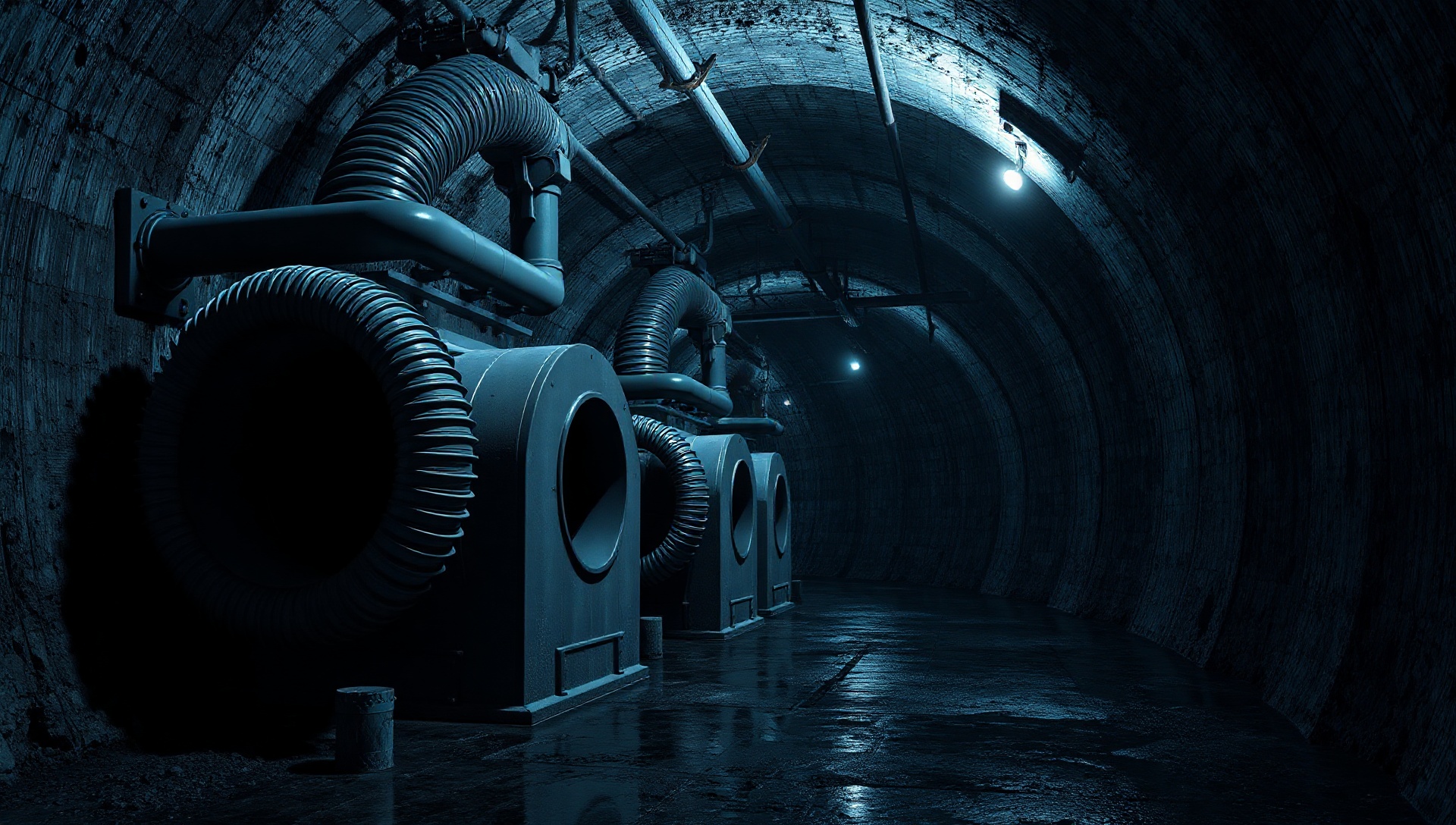
The load nobody is managing
Ask a control room operator what the main fans are doing right now and the answer is nearly always the same: full speed, exactly as they ran yesterday and every day since commissioning. Industry estimates commonly place ventilation at 25 to 50% of an underground mine’s overall energy consumption, and at some operations it approaches half the site’s bill. It is, by some distance, the largest energy load on most underground mines that nobody actively manages.
The reasons are understandable. Ventilation is a life safety system first and an energy consumer second. Fans are sized for peak development activity, commissioned at full duty, and left there because turning them down feels like risk. Nobody gets promoted for reducing airflow, and everybody understands the consequence of getting it wrong. The result is that mines routinely deliver full airflow to levels where nobody is working and no diesel engine is running.
The physics is unusually generous
Ventilation on demand, VOD for short, pays back faster than almost any other measure in mining for one reason: fan affinity laws. Fan power scales roughly with the cube of airflow. Reduce the airflow delivered to an inactive zone by 20% and the fan power serving it falls by close to half. Reduce it by 30% and roughly two thirds of the power goes away.
Very few energy measures anywhere in industry have this shape. Most efficiency work fights for percentage points against linear physics; VOD harvests a cubic relationship. That is why demonstration projects, including the well documented CanmetMINING trials, have shown fan energy savings of 20 to 50% from VOD implementations.
What a VOD system actually consists of
Measurement before control
You cannot modulate what you cannot see. The first stage is airflow and air quality sensing across the primary circuit and into the working zones: airflow stations in the main airways, gas monitoring where the ventilation plan requires it, and pressure measurement across regulators and fans. Most mines discover during this stage that their ventilation model and their actual airflows have drifted apart, sometimes substantially. That discovery alone is worth the survey, because it usually reveals both over-ventilated zones and under-ventilated ones.
Variable speed on the fans
Main, booster and auxiliary fans move from fixed speed to variable speed drives. This is usually the largest single line item in the project, and the one the cube law repays. Auxiliary fans serving development headings are often the quickest win, because their duty is most obviously tied to activity that starts and stops, shift by shift.
Zone control and activity tracking
The control layer matches delivery to demand: tracking where personnel and diesel equipment are, typically through the mine’s existing tagging and tracking system, and adjusting regulators and fan setpoints zone by zone. Sophistication varies. Scheduled setbacks around shift change, blasting windows and inactive levels capture a large share of the saving at a fraction of the integration effort, and are often the right first phase. Fully dynamic control, where airflow follows equipment in near real time, comes later, once the data and the operating confidence exist.
The safety question, answered properly
Every conversation about VOD reaches the same question within minutes: is this safe? It is the right question, and the answer has to be structural rather than rhetorical. A properly engineered VOD system is built inside the mine’s ventilation plan, not around it. Statutory minimum airflows are encoded as hard floors in the control system. Re-entry periods after blasting are enforced, not shortened. Gas monitoring interlocks override every energy function, and the presence of diesel equipment calls airflow up automatically before the machine reaches the zone.
Framed correctly, VOD strengthens the ventilation engineer’s position. For the first time the mine has continuous measurement of where air actually goes, rather than periodic surveys, and operations commonly find compliance easier to evidence after VOD than before it.
Results, measured rather than asserted
The published demonstrations and our own practice point the same way: 20 to 50% fan energy savings are achievable, with the final figure depending on how oversized the baseline ventilation was and how dynamic the control layer becomes. Because ventilation can be such a large share of an underground mine’s energy, savings at that scale on the fan systems are visible on the site’s total energy line, not buried in noise.
The discipline that makes the number trustworthy is the same one we apply to every programme: sub-metering on the fan circuits before the project starts, a regression baseline that accounts for production activity, and measurement and verification to IPMVP afterwards. A saving claimed off the drive’s display screen is an estimate. A saving verified against a metered baseline is a fact your board, your auditors and your offtakers can use.
Why now
Two pressures are converging on underground operations. Energy prices at remote sites carry a premium that makes every avoidable kilowatt hour more expensive than the industry average, and metals buyers are increasingly asking for Scope 3 evidence rather than intentions. A VOD programme answers both at once: it takes a structural cost out of the operation and produces a verified savings record that commercial teams can put in front of customers. Few projects on a mine site do both.
Where it sits in the bigger picture
VOD rarely stands alone. The same survey that scopes it usually finds dewatering pumps that can shift into off-peak tariff periods, compressed air leaks commonly worth 20 to 30% of compressor energy, and a comminution circuit nobody has baselined. Our advice is to treat VOD as the flagship of a site-wide programme rather than an isolated project: the sensing, control and metering infrastructure it requires serves every other measure too.
Where to start
Three steps, in order:
- Survey and baseline. A site energy audit that sub-meters the ventilation circuit and builds the activity-corrected baseline. This is the foundation for both the business case and later verification, and it is the core of our energy audits and compliance work.
- Phase the control. Start with scheduled setbacks on auxiliary fans and inactive levels, then extend to dynamic zone control as confidence and data accumulate. Our design and projects team takes schemes from feasibility through commissioning.
- Verify and hold the gains. Continuous monitoring against the baseline, savings verified to IPMVP, and drift caught before it compounds, through energy management and intelligence.
For the wider context on where energy goes in mining and metals operations, and what EM3 engineers across furnaces, comminution and electrification, see our metals and mining page.
More from the blog
 Project Delivery & Engineering
Setback strategies for classified areas
ISO 14644 sets particle limits, not airflows. How to design at-rest and occupancy setbacks that commonly cut cleanroom…
11 Jun 2026 Project Delivery & Engineering
From feasibility studies to final design: navigating the stages of an energy efficiency project
How early stage feasibility studies and concept design validate assumptions, cut capital waste and build CFO confidence before…
19 Mar 2026 Heat Recovery & Electrification
Waste heat recovery in hard-to-abate plants: what actually pays back
Preheater exhaust, cooler vent air and glass furnace flue gas leave site at temperatures worth real money. A…
11 Jun 2026
Every energy consultant wants to sell you something. We just tell you what to fix.
One curated view of what's actually happening in industrial energy
Think of this as your shortcut, case studies, technical insights, and upcoming webinars from EM3, delivered when there is something genuinely worth reading.