Setback strategies for classified areas
The blanket freeze
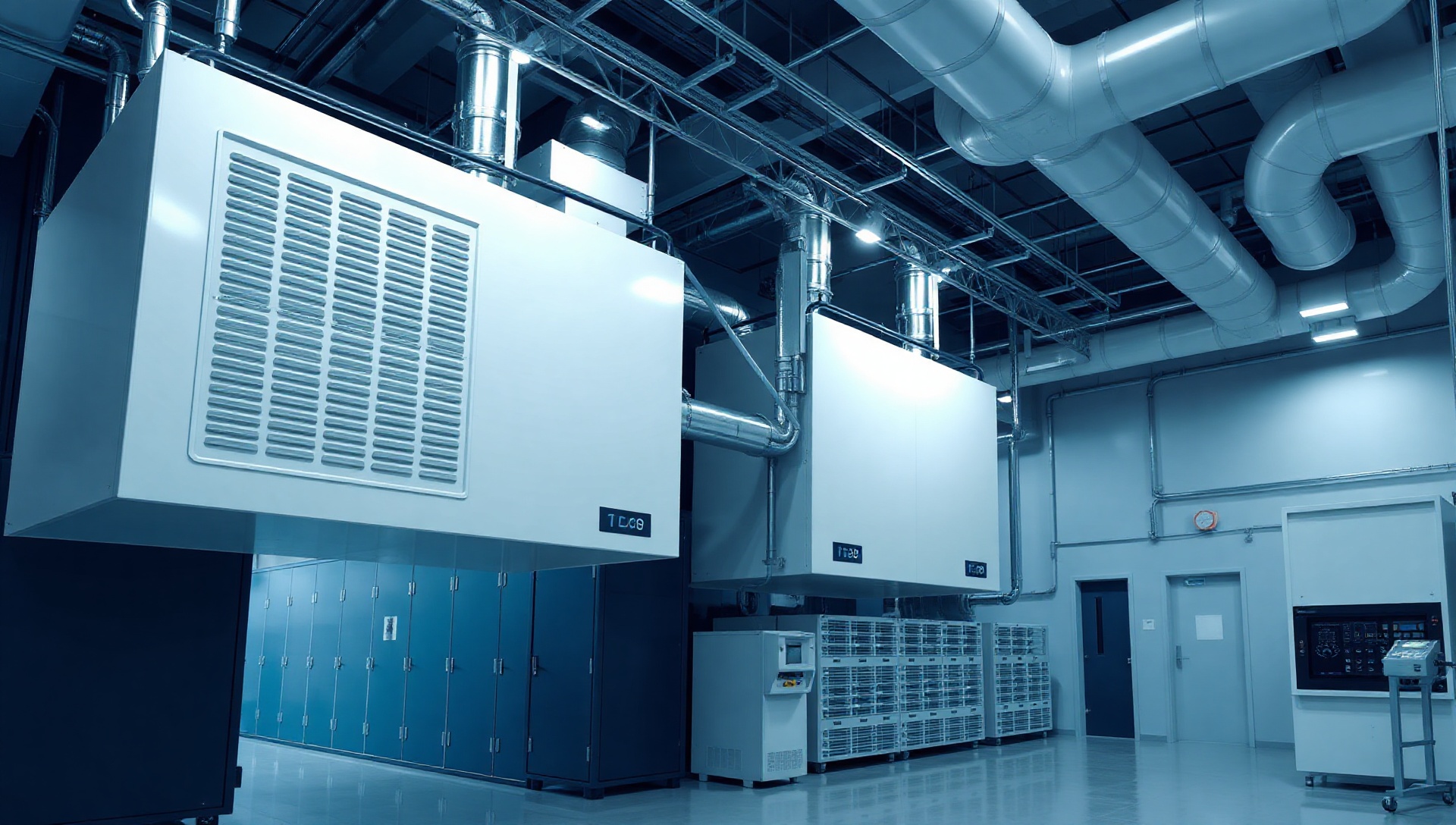
Walk most device or biologics plants at two in the morning on a Sunday and the cleanrooms are running exactly as they do at peak production: full air change rates, full fan power, full conditioning, for rooms that are empty and at rest. Ask why and the answer is always the same word: classification. The setpoints were established at validation, the record captures that operating state, and the working assumption is that touching anything means revalidating everything.
It is an expensive assumption. Cleanroom HVAC is commonly the single largest energy end-use at medical device and biotechnology sites, with published studies putting it at 36 to 67% of total facility energy. A load that size, running schedule-blind, is not a contamination control decision. It is the absence of one, preserved by the fact that nobody has assembled the evidence to make it.
What the standard actually fixes
ISO 14644 classifies cleanrooms by airborne particle concentration. It does not prescribe air change rates. The airflow that delivers your class was chosen by a design engineer who had to guarantee performance against a process that did not exist yet, so margin was stacked on margin, and the resulting ACH became scripture by repetition rather than by requirement.
Your own environmental monitoring data is the witness here. On most sites, particle counts in ISO 7 and ISO 8 rooms sit far below class limits in every operating state, year after year. That gap between measured performance and the class limit is headroom, and headroom is what a setback strategy converts into energy savings. The regulatory question is never whether the room may run at lower airflow; it is whether you can demonstrate that it holds class and recovers on demand. That is an evidence problem, and evidence problems can be engineered.
The physics that make setback pay
Fan power scales roughly with the cube of airflow. Reduce airflow by 20% and fan energy falls by roughly half; reduce it by 30% and roughly two thirds of the fan power is gone. No other setpoint in the building has that gearing, which is why air change rate work consistently outperforms equipment replacement on cost per kilowatt hour saved.
The fan train amplifies the case. Fans pushing air through HEPA and ULPA filtration can account for 30 to 50% of cleanroom HVAC electricity, and lower airflow also slows filter loading, extending filter life and reducing the pressure drop the fans work against. Add the avoided cooling, reheat, and humidification on the air volume you no longer move, and demand-controlled or at-rest setback commonly cuts cleanroom HVAC energy by 20 to 40%. Published ISPE work has demonstrated air change rate reduction during live operation at a major biologics manufacturer, with facility energy and emissions cut by 14%.
Designing a setback QA will sign
Start from your own monitoring data
The first deliverable is not a control change; it is a room-by-room review mapping measured ACH against ISO class, contamination risk, and the environmental monitoring history. This identifies which rooms have headroom, how much, and in which operating states. Rooms with tight margins or sensitive processes are excluded early, which is itself evidence that the method discriminates rather than gambles.
Trial, measure, prove recovery
Reductions are trialled one room at a time with continuous particle counting, never as a site-wide change. Each trial answers two questions: does the room hold class at the reduced airflow, and how quickly does it recover to full occupied performance when the setpoint steps back up? Recovery-to-occupied testing is witnessed with QA, so the recovery time is a measured fact in the record rather than an assumption in a meeting.
Automate the schedule, alarm the drift
Approved setbacks are then automated through the BMS, driven by production schedules and occupancy signals, with the return to full rates timed ahead of each production window. Alarmed limits make any drift or manual override visible immediately. Every step travels through change control with an impact assessment, and the finished evidence pack, monitoring trends, trial data, recovery tests, approvals, lives in the quality system where the next auditor can read it. Delivered this way, as a staged engineering project rather than a setpoint experiment, the work sits naturally with a design and projects team that is accustomed to validated environments.
What results look like
On a medical device campus in Ireland, this exact sequence, ACH review, AHU scheduling, and at-rest setbacks across sixteen air handling units, cut cleanroom HVAC energy by 21%, verified to IPMVP against a weather and production normalised baseline. Twelve months of post-implementation environmental monitoring recorded zero classification excursions, and recovery times sat comfortably inside the windows agreed with QA before the first setpoint moved.
The number matters less than its durability. Setbacks decay when an override survives a deviation, when a schedule stops matching production, when nobody owns the exception report. Permanent sub-metering and monitoring and targeting keep the saving real, comparing actual consumption against expected and flagging drift to a named owner while it is still cheap to correct.
The honest summary
Classification is a performance requirement, not a fixed airflow. The energy is in the gap between what your rooms are required to do and what they are currently doing around the clock, and on most sites that gap is worth 20 to 40% of the largest energy load in the building. The method is unglamorous: read your own data, trial carefully, prove recovery, document everything, and keep watching. QA does not need persuading. It needs evidence, and evidence is something you can build.
More from the blog
 Project Delivery & Engineering
Ventilation on demand: the quiet win in mining energy
Ventilation can account for up to half of an underground mine's energy, and fan power scales with the…
11 Jun 2026 Project Delivery & Engineering
From feasibility studies to final design: navigating the stages of an energy efficiency project
How early stage feasibility studies and concept design validate assumptions, cut capital waste and build CFO confidence before…
19 Mar 2026 Heat Recovery & Electrification
Waste heat recovery in hard-to-abate plants: what actually pays back
Preheater exhaust, cooler vent air and glass furnace flue gas leave site at temperatures worth real money. A…
11 Jun 2026
Every energy consultant wants to sell you something. We just tell you what to fix.
One curated view of what's actually happening in industrial energy
Think of this as your shortcut, case studies, technical insights, and upcoming webinars from EM3, delivered when there is something genuinely worth reading.