Grind Less Power Into Every Tonne
EM3 engineers furnace, comminution and electrification programmes for operations where energy is commonly the second biggest cost on site.
What Makes This Sector Different
Independent industry figures show where cost and carbon concentrate in mining and metals processing.
The Pressures We Hear On Site
Six problems plant managers, energy managers and sustainability directors raise with us across metals and mining.
Grinding circuits consume most of the power
On a concentrator, the mill drives dwarf every other electrical load, and kWh per tonne milled drifts upward every time ore hardness changes. Comminution commonly accounts for around 25% of an average mine site's final energy, and more on copper and gold concentrators. Most sites cannot see which part of the circuit is responsible.
Furnaces and ladles lose heat at every step
Off-gas leaves at several hundred degrees Celsius, doors stand open, ladles wait without lids, and refractory degrades quietly between campaigns. Each loss looks small on its own. Together they typically put double-digit percentages of fuel through the roof of the building.
Ventilation runs flat out regardless of activity
Main fans were commissioned at full duty and have stayed there ever since, whether a level is active or empty. Underground, ventilation can account for up to half of site energy. Fan power scales roughly with the cube of airflow, so over-ventilating is one of the most expensive habits in mining.
Diesel fleets waiting on electrification decisions
On open pit operations, haul truck fuel often exceeds site electricity in energy terms, yet the electrification business case keeps stalling on infrastructure, duty cycles and capital timing. Meanwhile the fleet keeps burning, and every deferral year is priced in fuel and carbon.
Remote sites pay premium energy prices
Long grid connections, constrained networks and on-site diesel generation mean every wasted kilowatt hour costs more than it would anywhere else. Efficiency is the cheapest megawatt a remote operation will ever buy, but it rarely gets engineered with the same rigour as production.
Customers now demand Scope 3 evidence
Steel and metals buyers are organising: more than 40 major businesses have committed through initiatives such as SteelZero to procure net zero steel. Offtakers ask for decarbonisation plans and verified data, not intentions, and those requests land on the energy manager's desk.
What We Engineer In Your Plant
We work at the level of the equipment, not the slide deck. These are the energy sub-systems EM3 engineers on metals and mining sites.
Furnaces, smelters and ladles
We audit and optimise reheat furnaces, electric arc furnaces and ladle practice: regenerative or recuperative burners, furnace pressure control, door discipline, hot charging and refractory upgrades.
Waste heat recovery
We map furnace and smelter off-gas streams running at several hundred degrees Celsius and engineer recovery to waste heat boilers, recuperators or process preheat.
Grinding and comminution circuits
We survey the crushing, SAG and ball milling circuit against a kWh per tonne milled baseline, optimise control, classification and scheduling first, then assess capital options such as HPGR, fine screens and pre-concentration.
Ventilation on demand
We engineer VOD schemes with variable speed drives, airflow sensing and zone control that match underground airflow to where people and diesel equipment actually are.
Dewatering and pumping
We right-size pumps and impellers, apply variable speed drives, and shift pumping into off-peak tariff periods where storage allows.
Compressed air systems
We run leak surveys, reduce pressure set-points and zone the network, the classic cross-cutting measures across mills, mines and smelters.
Electrification of heat and mobile loads
We build feasibility cases for electrifying furnace heat and haul fleets, from trolley assist to staged replacement, grounded in real duty cycle data rather than vendor brochures.
On-site generation and storage
We integrate on-site generation and storage with the site load profile so remote operations reduce both cost exposure and carbon at the same time.
How The Work Gets Done
Every engagement follows the same engineering discipline, whatever the sector.
Discover
Audits, assessments and baseline development that establish what actually drives your energy cost and carbon.
Design
Feasibility, concept design, modelling and the business case that turns an opportunity into a fundable project.
Deliver
Tendering, procurement, engineering design, delivery and commissioning, around production rather than in spite of it.
Manage
Continuous improvement and verified performance, so the gains are still there years later.
Results From The Circuit
Anonymised clients, real engineering measures, and savings measured and verified to IPMVP.
Go Deeper On Mining Energy
 Project Delivery & Engineering
The Missing Middle
The Missing Middle: a practical guide to what happens after an audit, how to decide which findings are ready to…
 Article
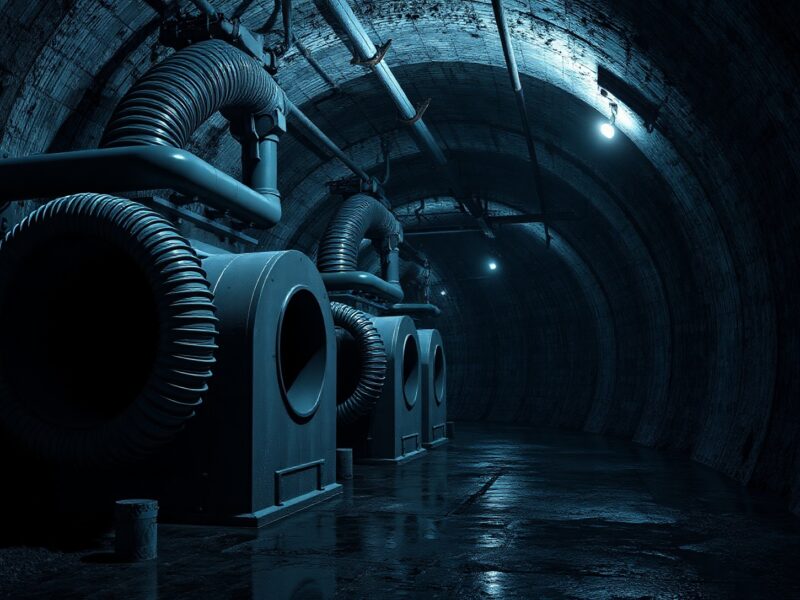
Ventilation on demand: the quiet win in mining energy
 Article
A step-by-step guide to reducing your carbon footprint: the EM3 customer journey
Frequently Asked Questions
Where does the energy go in a processing plant?
On mine sites, comminution commonly accounts for around 25% of final energy, and more on copper and gold concentrators. Underground, ventilation can reach up to 50% of site energy. In metals processing, furnace and smelting heat dominates. Dewatering, pumping and compressed air take most of the rest. The honest answer for your plant comes from sub-metering by circuit, which is where every EM3 audit starts.
Can ventilation be reduced safely?
Yes, when it is engineered rather than improvised. Ventilation on demand keeps statutory minimum airflows and re-entry rules intact while matching delivery to where people and diesel equipment actually are, using airflow sensing, variable speed drives and zone control. Demonstration projects have shown 20 to 50% fan energy savings. The system is built inside the mine's ventilation plan, with hard interlocks, so safety margins are preserved, never traded.
What does electrification mean for a remote site?
It means a staged plan, not a leap. We start with duty cycle and load data, then assess which loads electrify first: heat through waste heat recovery and electric technologies, mobile fleet through trolley assist or phased replacement. Network capacity, on-site generation and storage are evaluated together, because the grid connection is usually the binding constraint at a remote site. The output is a costed sequence your board can fund in steps.
Start With An Honest Audit
Tell us where your energy per tonne sits today and our engineers will tell you, honestly, where it can go. Most metals and mining engagements start with a site audit scoped around your biggest circuits.


