Leading food company phases out heavy fuel oil and upgrades boilers
A major producer of chocolate crumb needed to increase manufacturing output while moving away from its reliance on heavy fuel oil (HFO) for steam generation. EM3 conducted an energy audit, developed an energy management plan and executed implementation across five key areas: high-efficiency LNG boilers, an LNG fuel source, specialised boiler controllers, a heat recovery system and a new cooker. Boiler efficiency rose from 55% to 83%, production capability increased by 60 to 70%, and EM3 continues to manage day-to-day energy consumption through its Edge management service.
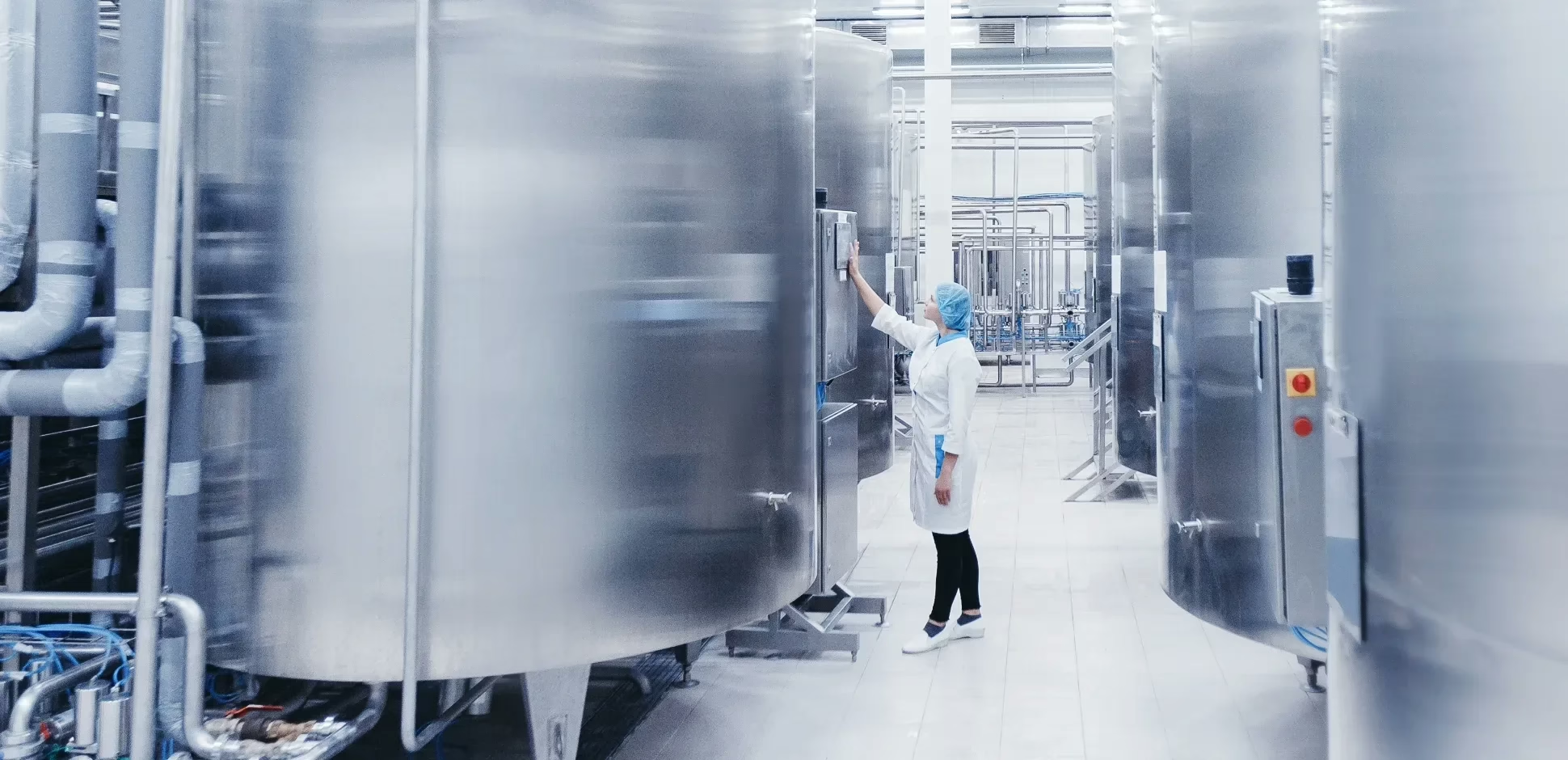

Enhanced output and sustainability at a European site
The food manufacturing facility needed to increase manufacturing output and move away from its reliance on heavy fuel oil (HFO) for production. The facility is a major producer of chocolate crumb, supplying various sub-sites for final production. The site aimed to enhance its manufacturing output while reducing dependence on heavy fuel oil for production processes.
Phasing out heavy fuel oil and upgrading inefficient boilers
The facility faced a pressing need to phase out heavy fuel oil as the fuel source for steam generation without impacting production capacity. EM3 conducted an energy audit, developed an energy management plan and executed implementation focused on five key areas.
High-efficiency LNG boilers: the existing steam boilers, oversized at 16,000kg/hr each, were highly inefficient, operating at just 55% efficiency. These boilers were replaced with 5,000kg/hr capacity boilers, achieving 83% efficiency and substantial energy savings.
LNG fuel source: liquefied natural gas (LNG) storage was installed to meet environmental regulations and reduce fuel consumption. This resulted in a reduction in fuel consumption, despite the slightly higher unit price, translating to cost savings and providing potential combined heat and power (CHP) opportunities.
Specialised boiler controllers: integrated controllers delivered optimised performance and efficient operation. The boilers now operate duty-duty until the load drops below 1,500kg/hr, at which point they switch to duty-standby mode.
Heat recovery system: low-pressure hot water (LPHW) was produced by employing a second-stage economiser to repurpose waste heat from flue gas. This approach ensured that heat, which would typically be wasted, was repurposed for other processes, enhancing sustainability and reducing energy consumption. A vapour condenser was introduced for heat recovery and integrated with the heat recovery tank. This reduced the load of the process cooling tower and provided heat for boiler feedwater (BFW) heating.
New cooker: a state-of-the-art cooker was successfully installed, elevating the facility’s production capabilities by 60 to 70%. This expansion allowed the site not only to cater to the Irish market, but also to support the demands of the UK market.
The combination of these factors led to substantial energy and cost savings while boosting overall system efficiency at the facility, solidifying its reputation as an industry leader in energy efficiency and sustainability.
EM3's Edge management service for day-to-day energy consumption control
EM3 continues to support the client with ongoing plant efficiency projects on heat recovery and compressed air. EM3 also maintains day-to-day control of energy consumption on the site with its Edge management service, ensuring energy consumption stays within specification.
Related case studies
 65% to 85%Steam boiler efficiency improvementFood and beverage
New boiler house reduces carbon footprint
In 2019, EM3 partnered with a leading alcohol beverage supplier to conduct a full energy audit of one of its European facilities.…
 21%reduction in refrigeration electricity, IPMVP verifiedDairy processing
How a multinational dairy processor cut refrigeration energy by 21%
A multinational dairy processor's Irish site ran its central ammonia refrigeration plant on the control logic it was commissioned with: fixed head…
 59%Reduction in total carbon emissions across the organisationPharmaceuticals
How a leading pharmaceutical company reduced carbon emissions by 59%
One of the world's largest pharmaceutical companies partnered with EM3 to transform its energy strategy across 27 manufacturing sites in the United…
Could we do the same on your site?
Book a scoping call. We will map your sites, systems and the decisions ahead, then show you where the savings are.