How a biologics fill-finish site cut compressed air energy by 24%
A biologics fill-finish site running compressed air continuously for process, instrument, and packaging duty asked EM3 to cut the cost of its most neglected utility without risking aseptic operations. A production-time leak survey, stepwise pressure optimisation, and proper compressor sequencing cut compressed air energy by 24%, with zero production interruptions and air quality parameters protected throughout.
The situation
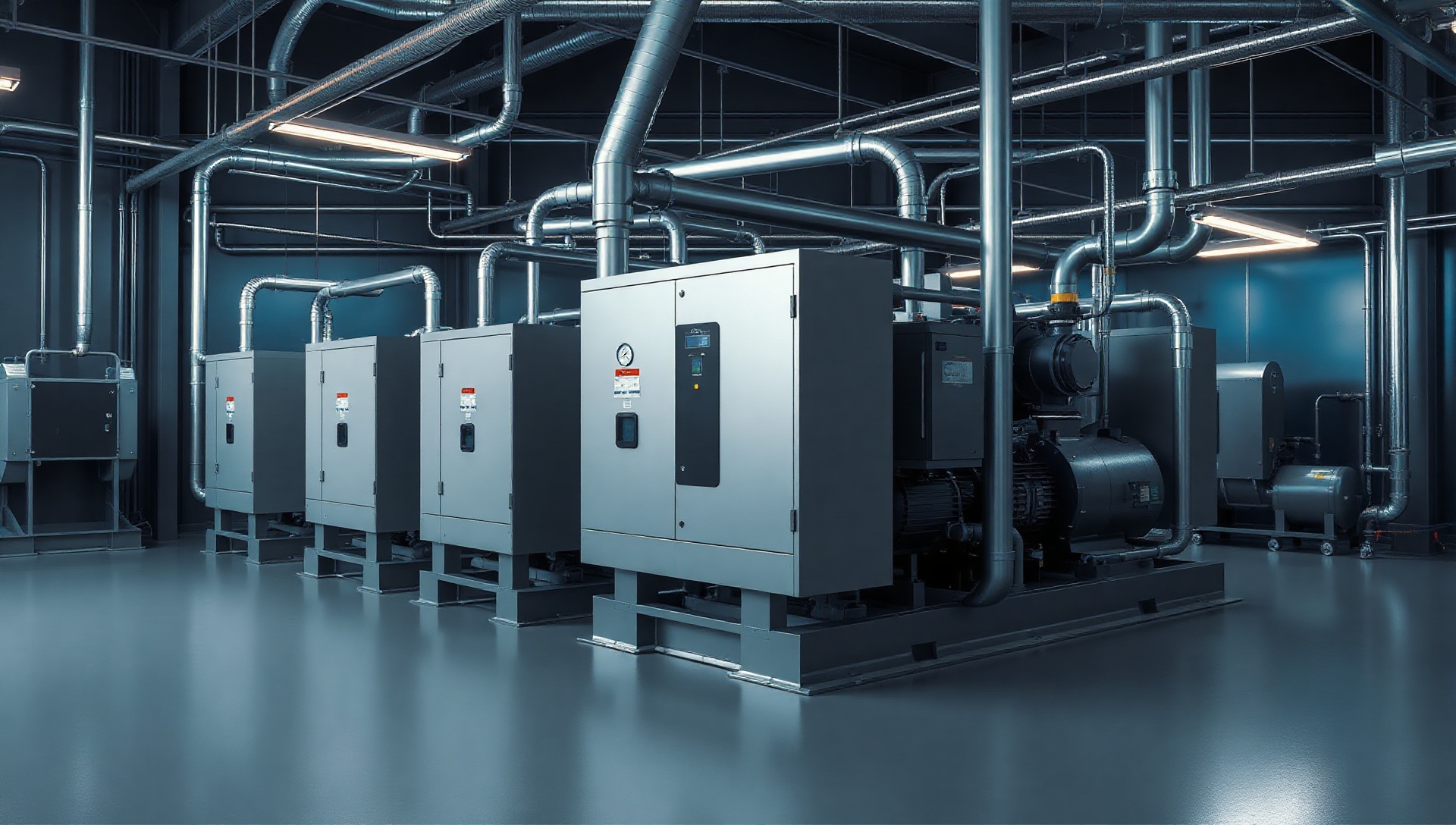
A European biologics fill-finish site ran compressed air continuously: process air for filling line actuation, instrument air for valve and control duty, and general air for packaging. Four fixed-speed compressors served the site through a single header, all controlled locally and all targeting a high fixed pressure that nobody could trace to an actual requirement.
Compressed air had never been metered separately, so its cost was invisible inside the site electricity bill. The physics made it worth finding: compressed air generation typically consumes 8 to 10 units of electrical energy for every unit of useful air energy delivered, with most of the difference rejected as heat. On a 24/7 site, that inefficiency runs every hour of the year.
The constraint
Air quality on a fill-finish site is a quality parameter, not a comfort setting. Instrument air dewpoint, particulate, and oil content all sit inside the quality system, and any perceived risk of a pressure dip at the filling lines would stop the conversation immediately.
There were also no shutdown windows to work with. The site ran continuously, so every survey, repair, and control change had to be executed with production live, staged so that no single step could put supply at risk.
What EM3 engineered
We began with measurement: temporary sub-metering on generation power and header flow for two weeks established the baseline and exposed the load profile, including a substantial flow that persisted through production pauses. An ultrasonic leak survey then covered the full distribution system during normal operation. We tagged, photographed, and sized 196 leaks, most clustered at the usage end in fittings, hoses, couplings, and drains, and logged each with a cost per year and a repair priority. The repairs were sequenced through planned maintenance windows, biggest losses first.
With leakage falling, we walked the system pressure down stepwise, identifying the genuine highest-pressure user, correcting its local restriction, and then lowering the header setpoint in small increments with continuous monitoring on the critical users. Each 2 psi reduction is worth roughly 1% of compressed air energy, and lower pressure also pushes less air through every remaining leak. Finally, a sequencer brought the four compressors under coordinated control, ending the part-load fighting between machines, and zero-loss drains replaced the timer drains that had been venting air on a schedule. Compressor heat recovery was scoped and costed for the site’s hot water demand as the natural next step.
The results
Compressed air energy fell by 24% against the metered baseline, verified through the permanent sub-metering left in place after the programme. The saving came from three reinforcing layers: leak repair, a meaningfully lower and stable pressure band, and sequenced generation that matches compressor output to actual demand.
The programme ran start to finish with zero production interruptions. Instrument air dewpoint and pressure at the filling lines were monitored continuously through every change, and no quality parameter moved. The leak survey now repeats on a fixed cycle, because leakage always grows back where nobody is watching.
What it means for the sector
Compressed air is the most expensive utility on most device and biologics sites precisely because it is treated as free. Leaks commonly waste 20 to 30% of compressor output, pressure runs higher than any user needs, and uncoordinated compressors burn energy fighting each other. None of those problems touches air quality, which means none of them needs a shutdown or a validation argument to fix.
A 20 to 30% reduction in compressed air energy is a realistic outcome for a site that has never run a structured programme, and the measures hold as long as the monitoring does. Meter it, survey it, lower it, sequence it, and keep watching: that is the whole discipline.
Related case studies
 21%cleanroom HVAC energy reduction, verified to IPMVPMedical devices
How a medical device campus cut cleanroom HVAC energy by 21% with classification intact
A medical device campus running injection moulding, assembly, and packaging across ISO 7 and ISO 8 cleanrooms asked EM3 to find energy…
 59%Reduction in total carbon emissions across the organisationPharmaceuticals
How a leading pharmaceutical company reduced carbon emissions by 59%
One of the world's largest pharmaceutical companies partnered with EM3 to transform its energy strategy across 27 manufacturing sites in the United…
 65% to 85%Steam boiler efficiency improvementFood and beverage
New boiler house reduces carbon footprint
In 2019, EM3 partnered with a leading alcohol beverage supplier to conduct a full energy audit of one of its European facilities.…
Could we do the same on your site?
Book a scoping call. We will map your sites, systems and the decisions ahead, then show you where the savings are.