Motors, compressed air and process heat programmes that standardise energy performance across your sites, engineered on the floor and verified to IPMVP.
Where the money goes in a typical manufacturing plant, in verified numbers.
The challenges
Six Ways Plants Leak Money
The same problems surface on almost every general manufacturing site we audit.
Energy performance inconsistent across sites
One plant runs tight while a sister site uses half as much again per unit, and nobody can explain why. Without comparable baselines and one audit method, every group review turns into an argument about whose numbers are right.
Compressed air treated as free
Production adds another blow-off and nobody sees a cost. Yet compressed air typically returns as little as 10 to 15% of the electricity it consumes as useful work, which makes it the most expensive utility on most sites.
Motor fleets running without speed control
Fans and pumps run flat out against dampers and throttle valves, burning the difference. Motor systems take around 70% of industrial electricity, so an uncontrolled fleet is the biggest cost line that nobody owns.
Ovens and process heating uninstrumented
Curing ovens, dryers and washers run on the settings they were commissioned with years ago. With no metering at equipment level, nobody can say what a cycle costs, so nobody challenges it.
Certificates without savings behind them
The ISO 50001 certificate is on the wall, the auditor is satisfied, and kWh per unit has not moved. A certificate proves the system exists; only engineering follow-through proves it performs.
Energy data everywhere, action nowhere
Meters, BMS exports, invoices and spreadsheets: the data exists, but nobody has the hours to turn it into a ranked, costed list of actions. The opportunity register stays empty while the inbox stays full.
What we engineer
What We Engineer In Your Plant
The energy sub-systems that decide a manufacturing site's bill, and what we do with each of them. This is where audits become projects.
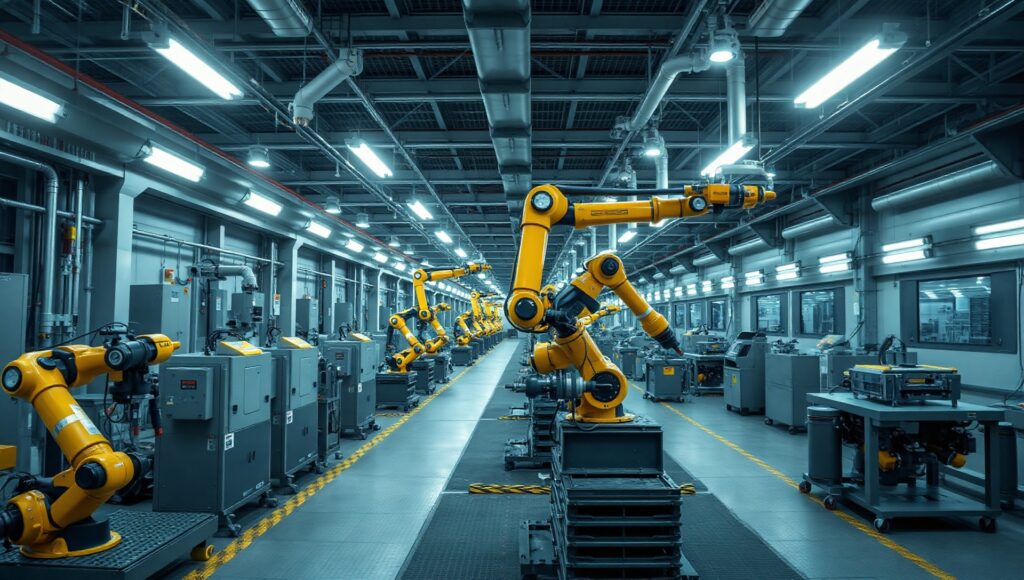
Compressed air systems
We run ultrasonic leak programmes, lower discharge pressure in monitored steps, correct sequencing and offload running, and recover compressor heat to useful loads.
Motors and variable speed drives
We survey motor duties, retrofit VSDs where dampers and valves are doing the flow control, and set an IE3/IE4 replacement policy so the fleet improves at every failure.
Process heating and ovens
We instrument ovens, dryers and washers first, then tune combustion, repair insulation, tighten scheduling and recover heat that currently leaves through the stack.
Paint and curing lines
We optimise oven scheduling, air seals and extract rates on paint and curing lines so heat and conditioned air stop following the product out of the booth.
HVAC and ventilation
We match air handling to occupancy and production schedules with setbacks, static pressure optimisation and demand control instead of running plant flat out around the clock.
Steam and hot water systems
We survey steam traps, improve condensate return, add economisers and insulation, and right-size boiler operation, where credible savings typically sit at 5 to 15%.
Chilled water and process cooling
We raise chilled water set-points where the process allows, reset condenser water, sequence chillers properly and apply free cooling, typically worth 10 to 30% of cooling plant energy.
Monitoring and targeting
We sub-meter significant energy users, build regression-based baselines and EnPIs, and track CUSUM so drift is caught in days rather than at the year-end invoice review.
How we engage
How The Work Gets Done
Every engagement follows the same engineering discipline, whatever the sector.
01
Discover
Audits, assessments and baseline development that establish what actually drives your energy cost and carbon.
02
Design
Feasibility, concept design, modelling and the business case that turns an opportunity into a fundable project.
03
Deliver
Tendering, procurement, engineering design, delivery and commissioning, around production rather than in spite of it.
04
Manage
Continuous improvement and verified performance, so the gains are still there years later.
How do you standardise energy work across many sites?
One method, applied everywhere. We run the same audit structure at every plant so findings are comparable, define SEUs and EnPIs the same way, and put every site on one monitoring discipline. A group opportunity register replaces eight local spreadsheets. Site teams keep ownership; EM3 provides the engineering capacity and the central view. The result is a single ISO 50001 system that scales, rather than a collection of local efforts that cannot be compared.
Where do savings usually hide in a general manufacturing plant?
In the motor room and the compressor house. Motor systems typically take around 70% of industrial electricity, and compressed air commonly delivers as little as 10 to 15% of the energy it consumes as useful work. Add uninstrumented ovens, throttled fans and pumps, and out-of-hours base load, and most plants hold a credible double-digit opportunity. A structured audit with sub-metering finds it; monitoring and targeting keeps it found.
Do VSD retrofits pay back quickly?
On the right loads, yes. Power on a centrifugal fan or pump varies with the cube of speed, so where a motor is throttled by dampers or valves, matching speed to demand commonly saves 50% or more on that system. Paybacks are typically short on long-running variable loads. The engineering work is candidate selection: we survey duties first, then retrofit only where the physics and the run hours justify it.
Next step
Start With An Audit
Tell us how many sites you run and where energy hurts most. We will come back with the audit plan that finds your hidden megawatts.

 Energy Audits & Compliance
 Project Delivery & Engineering
 Article
 Article
 Article


