How a colocation campus cut cooling energy by 17% with availability untouched
A European colocation operator needed growth in a market where new grid connections are paused, so EM3 turned its cooling plant into the capacity source. Aisle containment, EC fan retrofits, setpoint optimisation and extended free cooling cut annual cooling energy by 17% and improved annualised PUE from 1.61 to 1.53, with zero downtime and savings verified to IPMVP.
The situation
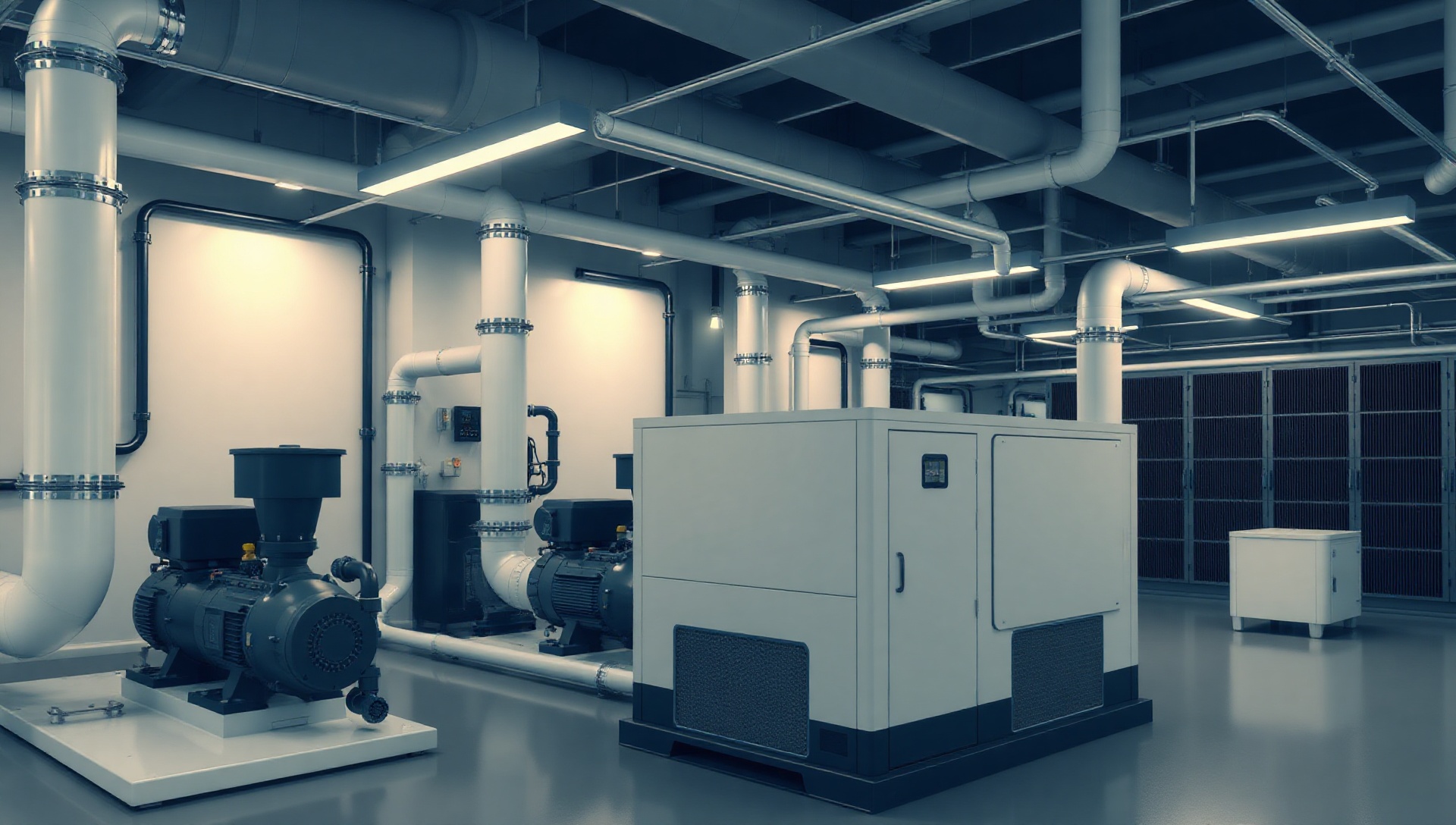
A European colocation operator with a campus in Ireland had a growth problem that capital could not solve. New grid connections in Dublin and the surrounding region are paused until 2028, and the operator’s expansion plans depended on capacity it could not buy. Every additional kilowatt of sellable IT load had to be found inside the existing connection, which put the spotlight squarely on the mechanical plant.
Cooling was the obvious candidate. The US Department of Energy notes that cooling can account for up to 40% of a data centre’s energy use in less efficient facilities, and this campus carried the fingerprints of phased construction: CRAH units of mixed ages running fixed-speed fans, partial aisle containment in the older halls, and chilled water setpoints that had not moved since commissioning. Nobody believed the plant was efficient. Nobody had been given a safe way to prove it.
The constraint
Availability was the business. Customer service level agreements left no room for thermal excursions, and the operations team had seen energy initiatives elsewhere that traded risk for savings. Their position was reasonable: a setpoint that has kept a hall stable for ten years has earned its place, and anyone proposing to move it carries the burden of proof.
EM3’s brief was therefore written around evidence. Cut cooling energy measurably, hall by hall, with sub-metered data behind every step, a defined reversal path for every measure, and no change made permanent until the monitoring said it was safe.
What EM3 engineered
The programme started with measurement. Cooling plant loads were sub-metered separately from IT load, giving a clean baseline and a way to verify each measure as it landed rather than arguing about it afterwards. With the baseline in place, the audit sequenced three measure families in order of risk, starting with the ones that touch no setpoint at all.
First, airflow. Hot and cold aisle containment was completed in the priority halls, with blanking panels fitted across open rack positions and floor grommets sealed to stop bypass air short-circuiting the cooling path. Second, the CRAH fleet: fixed-speed fans were retrofitted with EC fans on demand-based variable speed control. Fan power falls with roughly the cube of airflow, so the modest airflow reductions that containment makes possible translate into disproportionate fan savings: a 10% airflow reduction yields on the order of 25% less fan energy. This is where most of the programme’s value sat.
Third, the chilled water plant. Chilled water and supply air setpoints were raised in small, monitored steps, staying inside the ASHRAE allowable envelope throughout, with the working rule of thumb of 2 to 4% chiller energy saved per degree Celsius. The higher water temperatures had a second benefit: they extended the water-side free cooling window, which in the Irish climate already runs to thousands of economiser hours a year.
The results
Verified against the sub-metered baseline to IPMVP, annual cooling energy fell by 17%, inside the 10 to 20% range that this measure set credibly delivers. Annualised PUE improved from 1.61 to 1.53, measured over a full year rather than quoted from a favourable winter week. There were no thermal incidents and no downtime attributable to the programme.
The savings hold because the monitoring stayed. Cooling performance is now tracked continuously against the baseline, drift is flagged within days rather than discovered at year end, and every setpoint on the campus has documented evidence behind it. The operations team that started as the programme’s toughest audience now owns its targets.
What it means for the sector
In a grid-constrained market, efficiency is capacity. The energy this campus no longer spends on cooling is energy it can sell as IT load, which makes cooling optimisation one of the cheapest capacity acquisitions available to an operator who cannot get a bigger connection.
The verified data has a second life: it feeds the operator’s reporting under EED Article 12, where PUE and energy figures are now annual obligations. Done this way, compliance becomes a by-product of an engineering programme rather than a separate exercise.
Related case studies
 3offtake routes costed and risk-assessedData centres
Turning data centre waste heat into an investment-grade district export scheme
Facing planning and community expectations to do something useful with rejected heat, a leading European data centre operator asked EM3 to find…
 59%Reduction in total carbon emissions across the organisationPharmaceuticals
How a leading pharmaceutical company reduced carbon emissions by 59%
One of the world's largest pharmaceutical companies partnered with EM3 to transform its energy strategy across 27 manufacturing sites in the United…
 65% to 85%Steam boiler efficiency improvementFood and beverage
New boiler house reduces carbon footprint
In 2019, EM3 partnered with a leading alcohol beverage supplier to conduct a full energy audit of one of its European facilities.…
Could we do the same on your site?
Book a scoping call. We will map your sites, systems and the decisions ahead, then show you where the savings are.