Five places your plant is dumping recoverable heat
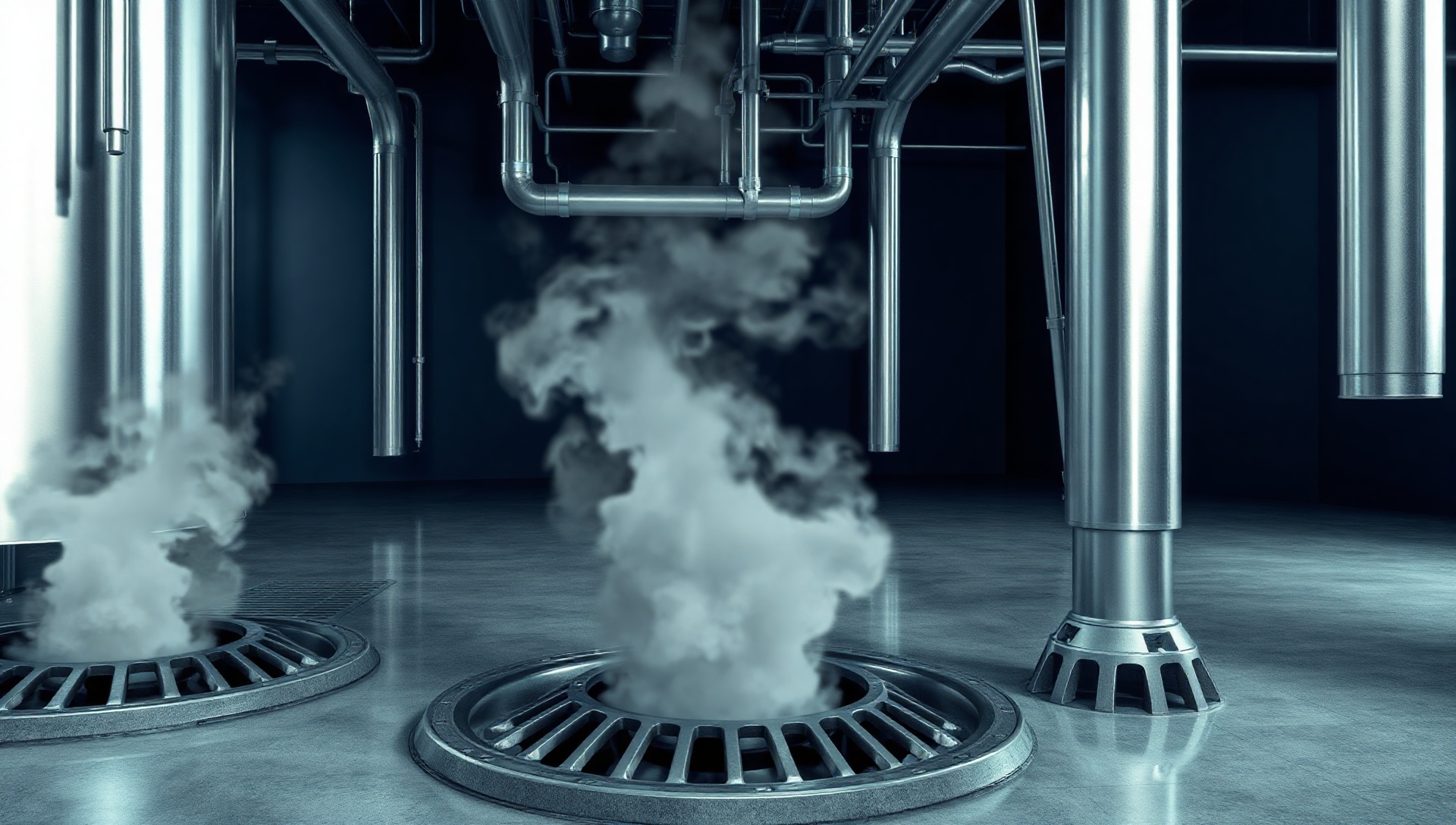
The thermal balance that never balances
Run a proper energy balance across a food plant and the books rarely close. Fuel and electricity go in, product goes out, and a large share of the purchased energy cannot be accounted for in anything you sell. It left through the stack, the drain or the condenser bank. With around two thirds of end-use energy at food and beverage plants typically going to process energy such as heating, those escape routes are not rounding errors. On most sites they are the single biggest prize.
These are the five places we find recoverable heat most often when auditing food and beverage plants, roughly in the order we tend to find them.
1. Refrigeration discharge: the heat you paid to create
Every kilowatt hour of cooling your compressors deliver is rejected as heat at the condensers, with the compressor work added on top. In chilled and frozen operations, where refrigeration commonly drives half or more of energy costs, that is an enormous and continuous stream of warm energy thrown to atmosphere.
The useful fraction is the discharge gas. Straight off the compressor it is hot enough to preheat boiler feedwater or CIP hot water through a desuperheater, before the condenser does the rest. The diagnostic question is simple: does your refrigeration plant run year round while your boiler heats cleaning water from cold? If yes, you are buying the same heat twice, every day.
2. The boiler house: flue, blowdown and lost condensate
Three separate losses share one room.
- Flue gas. A stack temperature well above feedwater temperature means an economiser has work to do, and feedwater preheat from flue gas is one of the most dependable retrofits in the sector.
- Blowdown. Boiler blowdown leaves at boiler temperature and usually goes to drain, through a flash vessel at best. Recovering that heat into make-up water is straightforward and cheap.
- Condensate. Every tonne of condensate not returned is hot, chemically treated water you pay to heat again from cold, with the water and treatment cost added on top.
None of this is exotic. US Department of Energy assessment experience is that plants which properly assess their steam systems typically uncover savings of 10 to 15%, often with paybacks under a year. The boiler house is where an audit earns its fee first.
3. Pasteuriser regeneration running below its potential
A pasteuriser’s regeneration section uses hot pasteurised product to preheat incoming cold product, so the same heat does two jobs. The effectiveness of that exchange was a design decision, made at the energy prices of the year the machine was bought. On older lines we regularly find regeneration effectiveness well below what current economics justify.
The symptom is visible from the utilities side: heating sections drawing steady steam while the cooling sections work hard at the other end. Both duties shrink when regeneration improves. Extending plate packs or replacing exchangers on a pasteuriser is a contained, well-understood project, and it pays on the steam bill and the refrigeration bill simultaneously.
4. CIP return and washdown water going to drain
Find the hottest drain on site and follow it backwards. It usually leads to CIP return lines and washdown. Cleaning water is heated, used once and sent to effluent still warm, where it can also load the effluent treatment plant on the way out.
Wastewater heat recovery exchangers built for fouling service can pull that heat back into incoming cold water, cutting the duty on whatever heats it next, boiler or heat pump alike. Almost no plant meters the heat leaving in its drains, which is exactly why the opportunity survives year after year. Measuring it is a short job with a clamp-on flow meter and a pair of temperature probes, and the result usually changes the conversation.
5. Evaporator vapour and dryer exhaust
Evaporation and drying are the heavyweight thermal duties in dairy and ingredients processing. The vapour boiled off an evaporator carries almost all of the energy spent creating it. Mechanical vapour recompression puts that vapour back to work as the heating medium, and on dairy evaporators it is an established measure rather than an experiment, often displacing a large share of the live steam the duty once consumed. Where MVR is already fitted, look next at dryer exhaust: warm, moist air leaving at volume, able to preheat inlet air or process water through the right recovery exchanger.
Why the heat is still being dumped
Rarely because nobody noticed. The recurring blockers are organisational. The heat source belongs to the utilities budget while the sink belongs to production. The source and the sink do not run in the same hour, and nobody scoped a buffer tank to bridge them. A food safety question about heat exchangers was asked once, answered badly, and never revisited. Every one of these is solvable with engineering: buffer storage bridges time, food-safe exchanger design and hygiene-zone-aware routing are standard practice, and capital committees respond to verified numbers.
Measure first, then recover
The order matters. Sub-meter the major thermal flows, build the balance, then rank a register of opportunities by cost and payback. That is the first week of a plant-wide energy audit, and it is how heat recovery moves from a hunch to a costed project list. After commissioning, keep watching: heat recovery degrades quietly, exchangers foul, bypass valves get left open and pumps fail without alarms. Continuous monitoring and targeting is what keeps recovered heat recovered, year after year. The plants that get this right treat the audit as the start of a discipline, not a report for the shelf.
More from the blog
 Energy Audits & Compliance
Reducing cleanroom air change rates without touching compliance
Air change rate is the single biggest energy lever in a GMP facility, and reducing it is an…
11 Jun 2026 Energy Audits & Compliance
Why compressed air is your most expensive utility
Compressed air converts roughly 8 to 10 units of electricity into one unit of useful work, then commonly…
11 Jun 2026 Energy Audits & Compliance
Why ISO 50001 certificates don’t save energy by themselves
ISO 50001 certifies that an energy management system exists, not that it performs. Field notes on the engineering…
11 Jun 2026
Every energy consultant wants to sell you something. We just tell you what to fix.
One curated view of what's actually happening in industrial energy
Think of this as your shortcut, case studies, technical insights, and upcoming webinars from EM3, delivered when there is something genuinely worth reading.