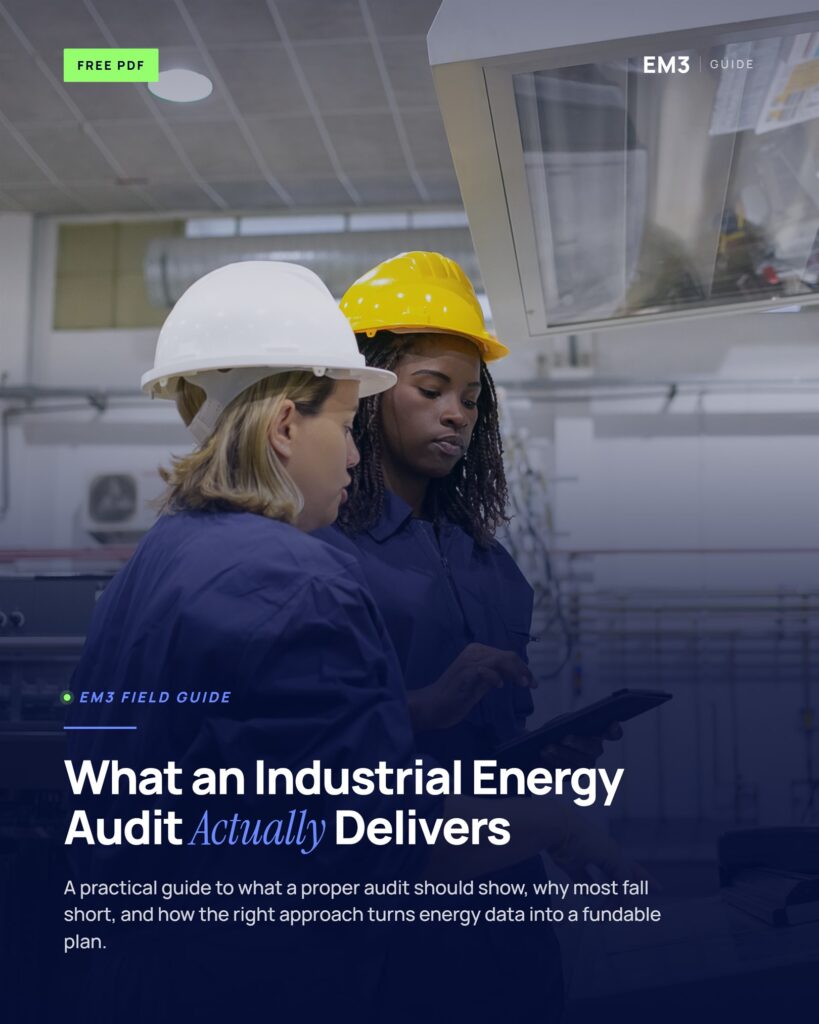
EM3 Field Guide
What an Industrial Energy Audit Actually Delivers
A practical guide to what a proper audit should show, why most fall short, and how the right approach turns energy data into a fundable plan.
What's inside
Nine things a proper audit must deliver
Most audits cover some of these. The strongest cover all of them. Use this as a benchmark for any audit you have had, or any you are considering.
A verified picture of where energy is actually going
An accurate, site-wide baseline built from metered data and engineering analysis, not just what the utility bills show.
The systems driving the majority of cost
The few significant energy users that account for a disproportionate share of spend, named by system, cost and carbon.
A visual map of how energy flows through the site
Where energy enters, how it moves through utility systems, where it reaches the process, and where it is lost on the way.
A ranked opportunity list with the numbers that matter
Each action with savings, capital cost, payback, carbon impact and applicable incentives, separated by type and timeline.
Which carbon actions make financial sense, and in what order
Where cost reduction and decarbonisation overlap, and which measures are sound now versus which need more work first.
A phased plan: what to do first, next and later
A roadmap grounded in engineering logic, so capital is committed in the right sequence, not the most visible one.
Grants and incentives built into the financial case
Funding from DOE Better Plants, ENERGY STAR and the Inflation Reduction Act, factored into payback from the start.
A business case the site can take to finance
A decision-ready output with clear assumptions and named uncertainties that finance can challenge and engineering can defend.
A way to measure performance against output
Performance indicators that separate cost rising from growth from cost rising from waste, so you can track what is working.
More from EM3
 Project Delivery & Engineering
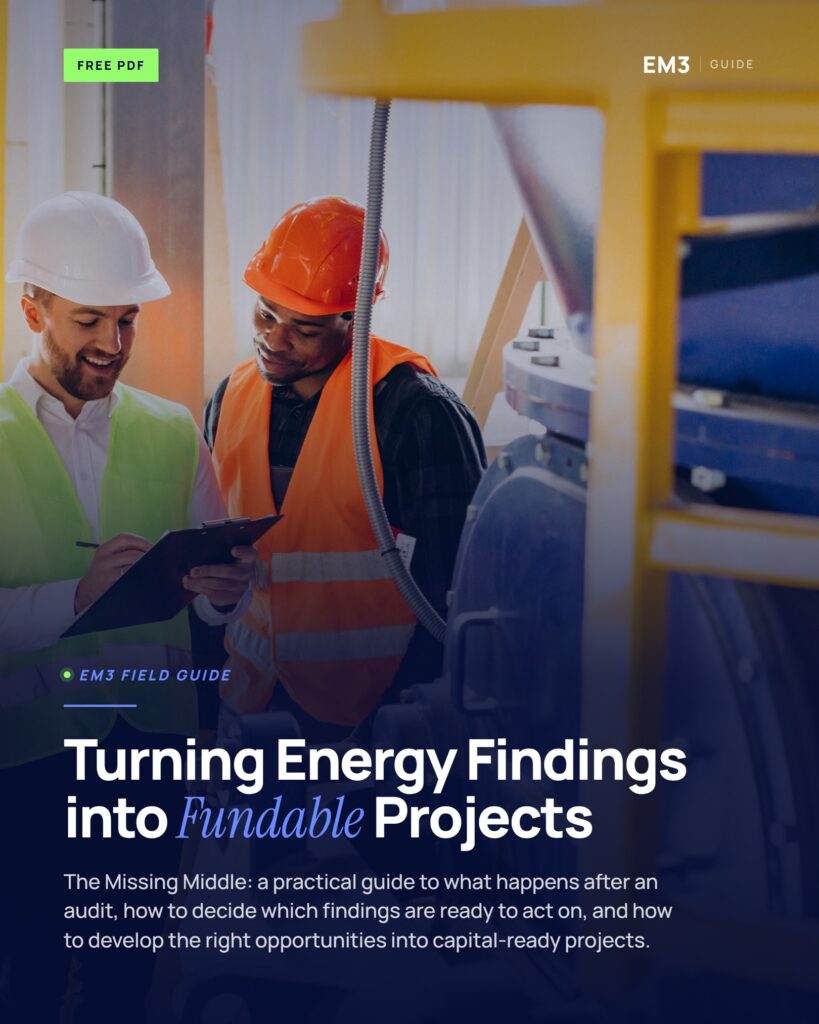
The Missing Middle
The Missing Middle: a practical guide to what happens after an audit, how to decide which findings are ready to…
 Decarbonisation Strategy
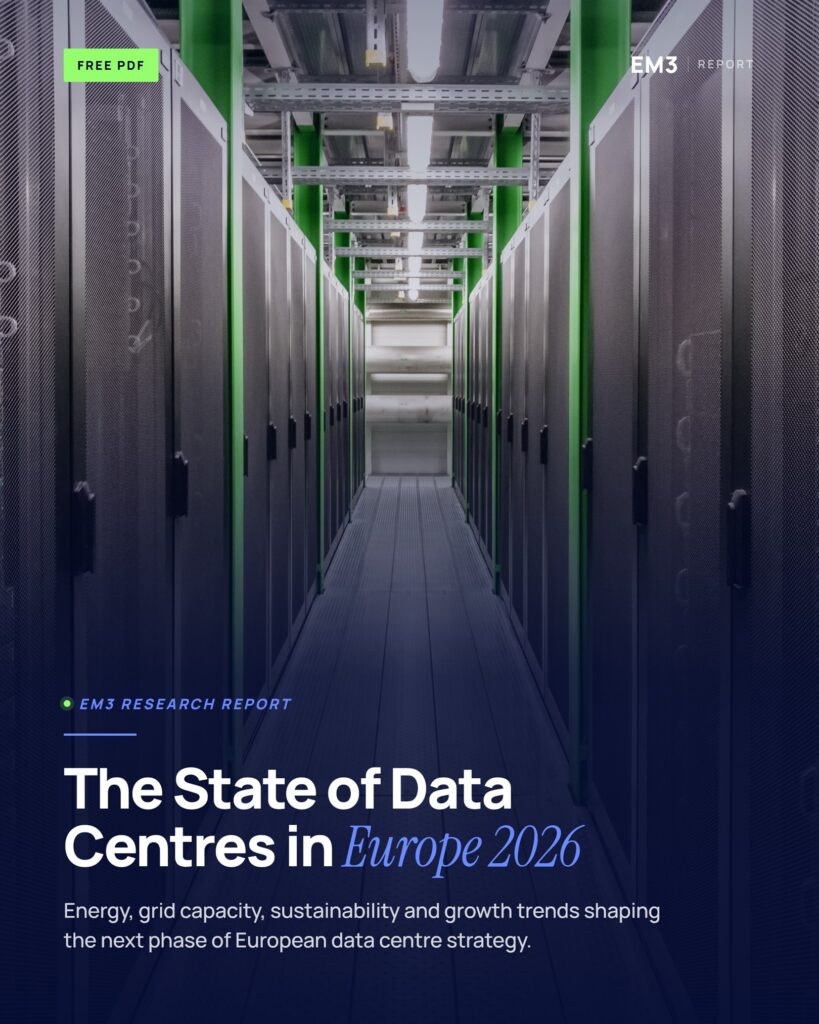
The State of Data Centres in Europe 2026
Energy, grid capacity, sustainability and growth trends shaping the next phase of European data centre strategy.